CULTURE
A Million Visitors: The Irish Whiskey Trail
Irish whiskey distilleries passed a million visitors in a year, spending €41.6 million on site. The trail is now one of Ireland's biggest tourist attractions.
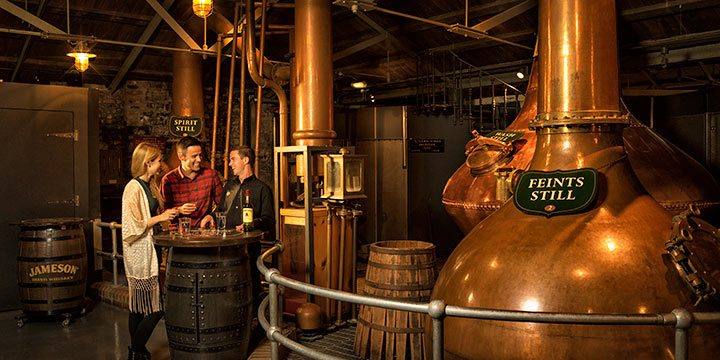
Irish whiskey has crossed a threshold that has nothing to do with what is in the glass. In the twelve months to June 2025, the country's distillery visitor experiences welcomed 1,010,261 guests, a 23 percent increase on the previous year, according to figures published by the Irish Whiskey Association. The average visitor spent €41.24 on site, putting €41.6 million directly into local economies. Distillery tourism is no longer a sideline for the industry. It is one of Ireland's major visitor attractions in its own right.
The scale is worth pausing on. A million visitors puts the whiskey trail in the company of the country's biggest cultural draws, and it did it in a year when international tourism faced every headwind the industry could name. The association's director, Eoin Ó Catháin, credited the investment distilleries have made in their visitor experiences: the offering has professionalized, and the numbers have followed.
Where they go
The top five experiences by visitor numbers read like a map of the industry's history and its present. Jameson Distillery Bow St. in Dublin, the brand's spiritual home. Bushmills in County Antrim, the old north. Teeling, the first new distillery in Dublin in 125 years when it opened. Midleton in County Cork, the industry's working giant. And the Shed Distillery in County Leitrim, the farm distillery that proved the trail extends to the northwest. Between them they cover four provinces and three centuries of whiskey making.
The growth stories underneath are just as telling. The association singled out Dingle in Kerry, Micil in Galway, Ahascragh in Galway, and Skellig Six18 in Kerry among the experiences showing strong growth. These are small, regional distilleries, and their rise suggests the trail is widening: visitors are not just doing Dublin and the famous names but driving the back roads. That is what a trail looks like when it matures.
A million visitors puts the whiskey trail in the company of Ireland's biggest cultural draws.
The economics of the visit
The €41.24 average spend is the figure the industry will quote, and it deserves scrutiny. It is onsite spend: tours, tastings, bottles, food and drink at the distillery. It does not count the hotel in the town, the dinner down the road, or the taxi home, which means the real local impact is larger than €41.6 million, by an amount nobody has measured. For rural distilleries, the visitor center can be the difference between a production site and an economic anchor.
The demographics point to a durable audience. The core visitor is 34 to 45, and the top markets are the United States, the United Kingdom, Germany, and France: exactly the markets where Irish whiskey sales are strongest. The trail and the category feed each other. A visitor who has stood in the stillhouse buys the bottle at home, and a drinker who knows the bottle plans the trip. The Irish Whiskey Association's Irish Whiskey Way initiative, linking experiences into itineraries, is built on exactly that loop.
A million visitors is a milestone, but the interesting number is the 23 percent. Growth like that does not come from a mature market coasting. It comes from an industry still building: new distilleries opening, old ones expanding their visitor offerings, and a country discovering that its whiskey is a destination, not just a drink.
The association's Irish Whiskey Way initiative is the attempt to turn that discovery into infrastructure: linking distillery experiences into touring routes, so that a visitor who comes for Jameson in Dublin keeps driving to the Shed in Leitrim or Dingle in Kerry. The trail works best as a network, and the million-visitor year is the proof that the network has arrived. The next test is whether the regions the tourists drive through see their share of the €41.6 million.
From the same shelf