WHISKY
Three New Scotch Addresses: Ardgowan, Luss, Lerwick
A whisky distillery, a visitor destination, and a northern frontier. Three different answers to the same question: what does Scotch expansion look like now?
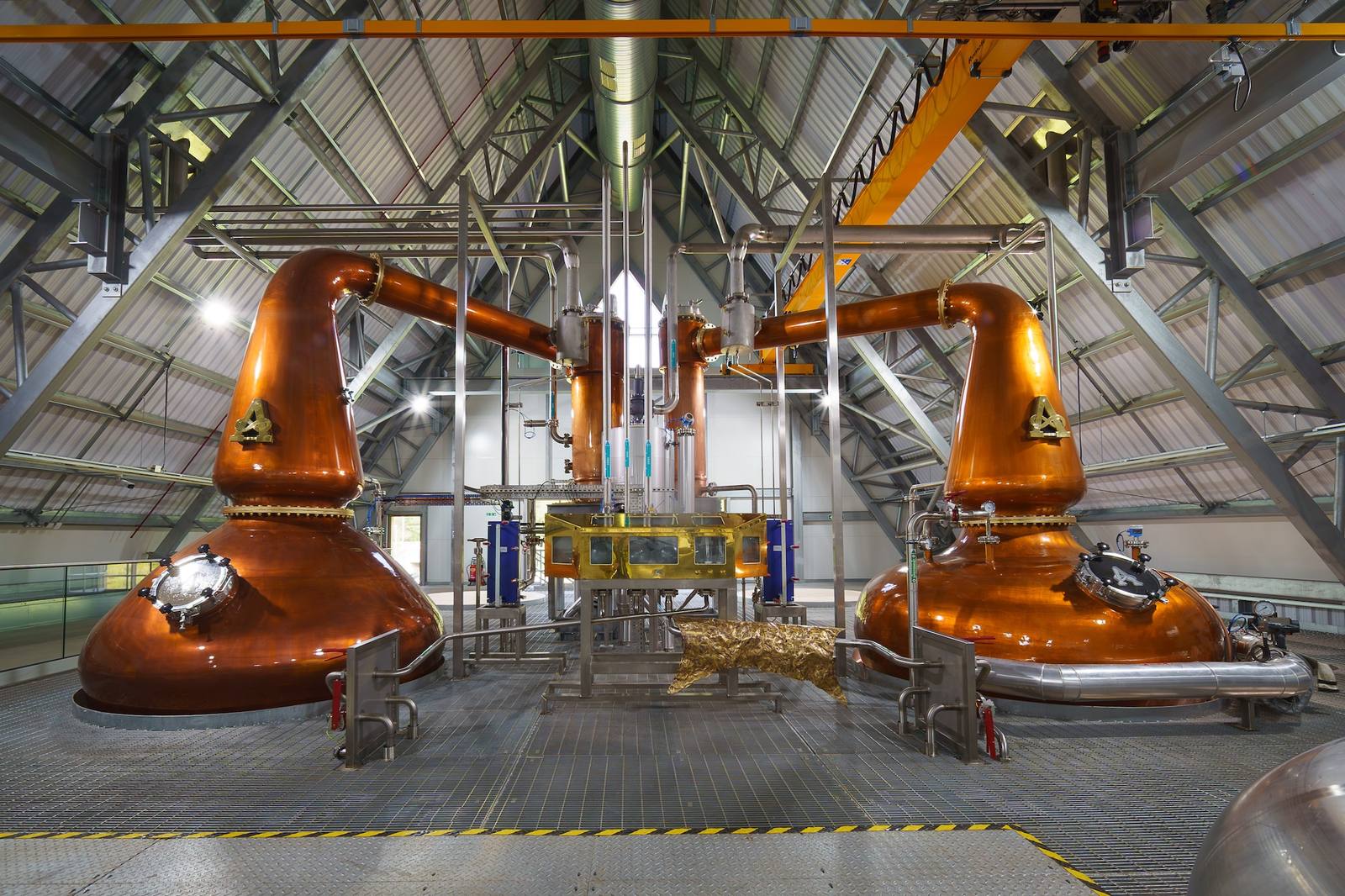
Scotch whisky keeps building. After a decade in which new distilleries opened at a pace not seen since the Victorian era, the latest arrivals are no longer variations on one theme. Three of the most instructive new addresses in Scotland represent three different models of what a distillery can be in 2026: a production-led whisky maker at Ardgowan, a visitor-led brand destination at Luss, and a frontier ambition at Lerwick. Only one of the three has filled a cask with whisky.
That last fact is worth stating plainly, because the industry's press releases tend to blur it. This article separates what is built, what is filling, and what is planned, from published records.
Ardgowan: The Production Play
Ardgowan Distillery in Inverkip filled its first cask and opened its doors to the public on 20 June 2025, after eight years of planning and construction. Founded in 2017 by Roland Grain, the distillery broke ground on its 20 million pound site in November 2023. It is said to be the first new distillery to open in Inverclyde for more than a century: the last distillery to operate in the region was destroyed in the Greenock Blitz on 7 May 1941.
Ardgowan's stated ambition is long-maturation Sherry cask whisky. The distillery has invested millions of pounds in casks seasoned for three years with Spanish Sherry, intended for maturation periods of 18 years or more, and its signature Infinity Casks were created exclusively by Bodegas Miguel Martín and Stuart MacPherson, The Macallan's former master of wood. The build itself leans hard into sustainability: a Scandinavian longhouse design, a 97 percent recycled aluminium roof, and thermal vapour recompression to recycle heat waste. Distillery manager Laura Davies leads a team with, the company says, more than seventy years of combined industry experience.
The quote from Grain at the opening is the right one for this model: producing whisky is all about time and patience. Ardgowan is the classical playbook, executed with modern capital. First fill in 2025 means first 18-year-old whisky, if the plan holds, in the 2040s.
Luss: The Destination Play
Luss Distillery, on the banks of Loch Lomond, was officially opened by Scotland's first minister, John Swinney, on 2 February 2026, after a soft opening in late 2025. It is a multi-million-pound build by the Loch Lomond Group, and its headline number is not a production capacity but a visitor forecast: the site is expected to welcome up to one million visitors during 2026.
The purpose-built site, four buildings in all, houses a working distillery alongside immersive discovery areas for whisky and gin, a dedicated tasting room, retail space, and a café with views of the loch. The retail offer draws on the group's wider portfolio, which includes Loch Lomond, Glen Scotia, and Littlemill single malts; the first minister was presented with a Loch Lomond 14-year-old Luss Exclusive Cask, limited to 291 bottles and available only at the site. This is the destination model: the distillery as brand home, the still as theatre, the whisky credentials carried by the portfolio rather than the postcode. It is a significant commitment to rural tourism by one of Scotland's largest independent distillers, made at a moment when, in Swinney's own words, there are serious challenges impacting the whisky sector at home and abroad.
Lerwick: The Frontier Play
At the far northern edge of the map, Lerwick Distillery aims to be Shetland's first whisky distillery. In August 2024, Highlands and Islands Enterprise reported that the team had taken delivery of copper stills and distilling equipment at its Market Street premises, a property on the street formerly known as Whisky Lane, which is being renovated to house the distillery with a shop and tasting rooms. The company was awarded 250,000 pounds from HIE toward the cost of the new production equipment, with more than nine jobs expected and a planned capacity of around 200,000 litres of whisky a year at full production.
What is not yet a matter of public record is whether Lerwick has begun production or filled its first cask. The August 2024 report describes equipment delivery and renovation, not distilling. The directors, including Martin Watt, speak of the ambition and the low-carbon focus with evident seriousness, but this one remains a plan in progress, and it would be wrong to write it up as anything else. Frontier distilling is a slow business, and Shetland has waited this long.
One has filled its first cask. One expects a million visitors. One is still waiting on its first run. Three models, one industry.
Taken together, the three addresses describe an industry that has moved past the single template of the new-build distillery. Ardgowan is betting on liquid and time. Luss is betting on place and story. Lerwick is betting that there is still unclaimed ground on the map. Time will sort the bets, as it always does in Scotch. The casks, after all, are the only part of the business that cannot be hurried.
From the same shelf