WHISKY
The Dalmore Gives the Cigar Malt an 18-Year-Old Anchor
The new Cigar Malt Signature Reserve is a permanent five-cask addition to the Principal Collection: 18 years old, 46 percent, on sale 19 October at £299.

The Dalmore has given its Cigar Malt range the one thing it never had: an age-stated anchor. The new Cigar Malt Signature Reserve Aged 18 Years joins the distillery's Principal Collection as a permanent expression, bottled at 46 percent and priced at £299. It goes on general sale on 19 October 2026, with members of The Dalmore Guild able to buy from 15 October.
The Cigar Malt idea is more than two decades old. The original Cigar Malt Reserve was conceived as a whisky built to stand beside a cigar, and it gathered a devoted following before an uneven history: discontinued in 2009, then brought back in 2011 after demand from its drinkers. What it never had was a permanent older sibling with an age statement to give the range weight. This release is that sibling.
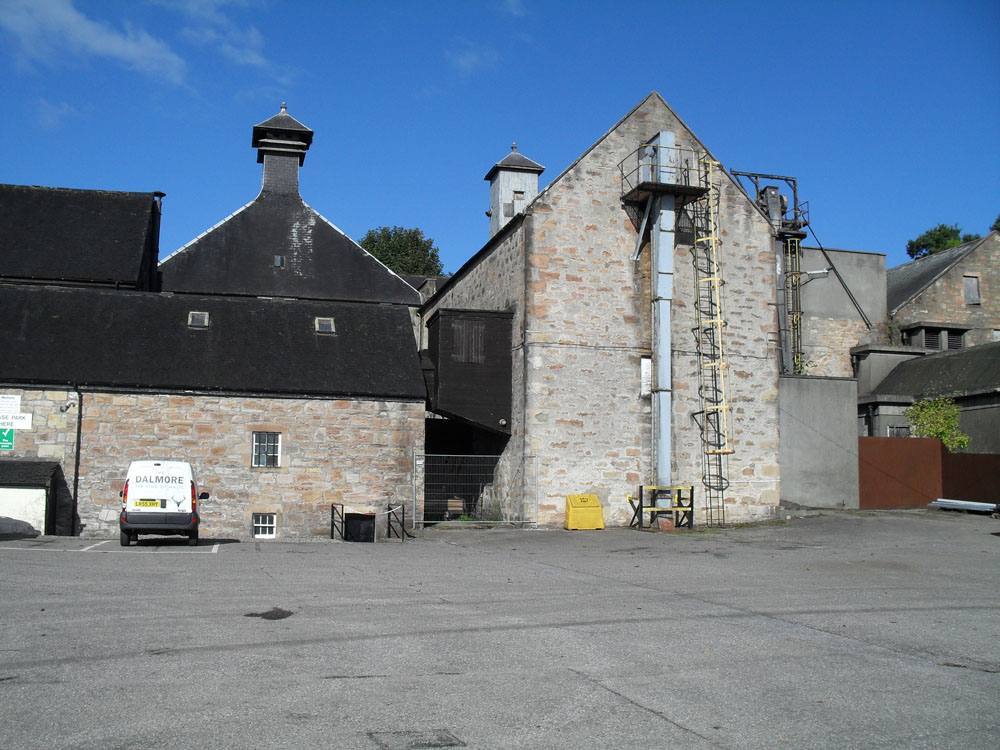
The maturation is the story here, and it is characteristically Dalmore in its ambition. The whisky spends its first 16 years in American white oak ex-Bourbon barrels, then finishes in four further cask types: Matusalem Sherry casks, French oak Marsala casks, French oak Cabernet Franc barriques and French oak Cabernet Sauvignon barriques. Five casks, each given a defined job by the distillery's whisky makers.
The division of labour is unusually explicit. The Bourbon barrels are described as providing sweetness and lift at the foundation. The Matusalem Sherry casks bring depth, dried fruit and nutty richness. The Marsala casks introduce ginger warmth and spice, keeping the finish active, while the two red wine casks split the structural work: Cabernet Franc for aromatic nuance and savoury complexity, Cabernet Sauvignon for tannin and structure. The distillery's framing is that the Franc keeps the whisky precise rather than heavy, which is another way of saying this is a rich whisky that has been engineered not to collapse under its own richness.
On paper, at least, the flavour profile reads like a Dalmore greatest-hits compilation. The distillery's notes promise chocolate orange, dried fig and dark fruit on the nose, with hints of oud and sandalwood, and a palate of forest berries, sticky dates, orange marmalade, dark chocolate and cinnamon spice. Those are house notes, reported here as the distillery presents them, and they will be tested against the glass soon enough. The whisky is non-chill filtered and of natural colour.
There is a broader point worth making about permanence. The Scotch release calendar has become a treadmill of limited editions, and collectors have learned to treat most announcements as perishable. A permanent addition to a core range is a different kind of commitment: it says the distillery expects this whisky to still make sense in five years, not just five weeks. For a range built around ritual, the after-dinner dram, the slow hour, permanence is arguably the point. A ritual needs a constant.
It is also worth noting the timing. The autumn release window is when the industry's heavyweight bottlings land, and £299 for an 18-year-old from a distillery of this standing is pitched at the serious end of the Principal Collection without straying into trophy territory. Whether it earns its place beside the older Cigar Malt expressions will come down to the glass. But as a statement of intent, an 18-year-old permanent Cigar Malt, built from five casks and priced to be drunk rather than shelved, is one of the more considered releases of the season.
The range, briefly
For those who lost track during the wilderness years: the original Cigar Malt Reserve arrived more than two decades ago as one of the first whiskies explicitly built for the cigar smoker, a rich, full-bodied dram meant to hold its own against smoke rather than be flattened by it. Its discontinuation in 2009 left a gap its devotees felt keenly, and its 2011 return in new dress confirmed the affection was real. Since then the range has grown in stature without ever gaining the age-stated senior expression that ranges of this ambition usually acquire. The Signature Reserve 18 fills that gap, and its permanent status matters more than its age statement. Limited editions come and go; a permanent 18-year-old is a promise about what the range is.
The mechanics of the launch are worth noting too. Guild members get first access from 15 October, four days before general sale, which continues the industry's slow shift toward direct relationships with its most committed drinkers. For a whisky designed around ritual, that is the right audience to reach first: the people who already own a humidor and know what to do with it.
From the same shelf