WHISKY
Heaven Hill Springs: A Distillery Built for Ninety Years
US$200 million, 150,000 barrels a year, and the return of Heaven Hill distilling to Bardstown for the first time since 1996.
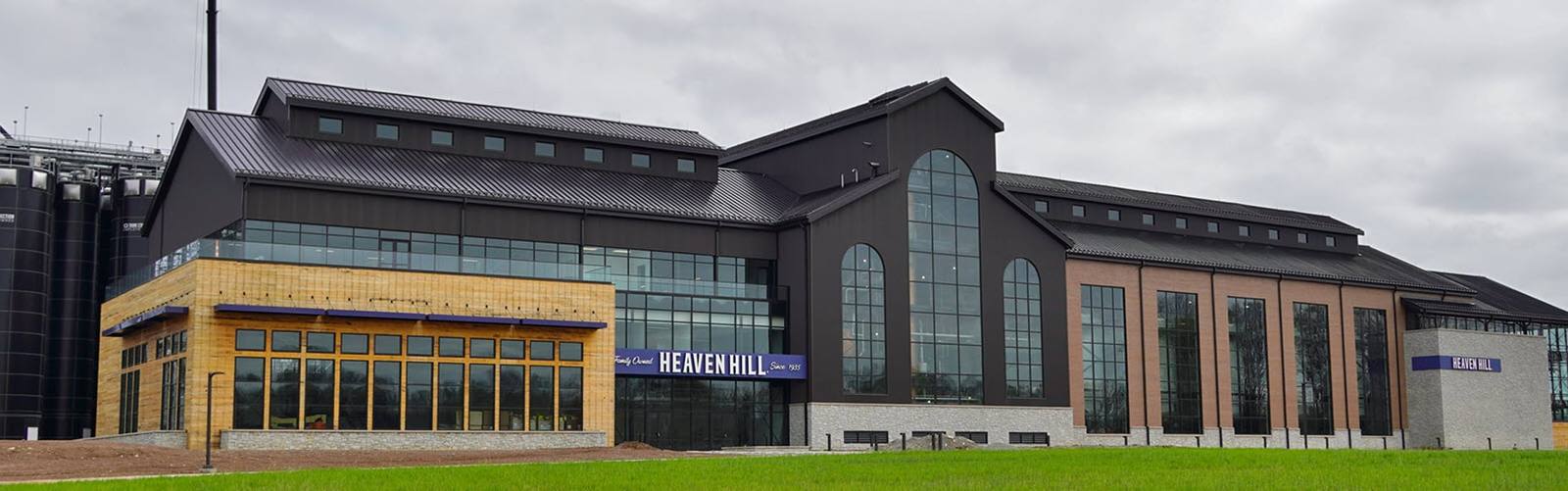
Heaven Hill Brands describes itself as the largest family-owned and operated spirits company in the United States, and its newest asset is designed to make that description last. Heaven Hill Springs Distillery in Bardstown, Kentucky, a US$200 million build, began production in April 2025. It is the first time the company has distilled in Bardstown since 1996, and it joins the existing Bernheim facility in Louisville in a production footprint the company calls the largest of any independent Bourbon producer in the world.
The figures in this article come from Heaven Hill's own account of the build, reproduced from its public grand-opening announcement. They are company figures, not independently audited, but they are worth examining because of what they say about how the biggest independent players are thinking about the next two decades of American whiskey.
The Build
The distillery opened with an initial capacity of 150,000 barrels per year and was engineered for future scalability to 450,000 barrels. The still house centers on a 60-foot Vendome copper still producing more than 33,000 proof gallons per day. Around it, the facility includes in-house live yeast propagation using Heaven Hill's proprietary strain, onsite wastewater pretreatment that generates renewable energy, and a 22-gallon beer system that reduces water consumption by more than 24,000 gallons per day. The company positions the site as the flagship of its 2030 Environmental Sustainability Strategy.
There is a lineage being honored here, and the company is not shy about it. The first barrel at the new distillery was filled in April by Charlie Downs, master distiller emeritus and the only Heaven Hill employee to have worked at all four of the company's distilleries: the original Old Heaven Hill Springs, Bernheim in Louisville, the Evan Williams Bourbon Experience, and now the new Springs facility. The site also memorializes Parker Beam, whose 56-year distilling career shaped the company's identity. Current master distiller Conor O'Driscoll called the facility a tribute to the craftsmanship that came before and a promise to live up to its standards.
The Numbers Behind the Metal
The capacity figures deserve a moment of context. At 150,000 barrels a year, Heaven Hill Springs alone is already a major production asset; at the planned 450,000 barrels, it would rank among the largest distilleries in Kentucky. That expansion headroom is the real story. A distillery of this scale takes years to design, permit, and build, and its output will not be ready to drink for four to eight years after the first barrels are filled. This is a bet on where American whiskey demand will be in the early 2030s, not where it is today.
The company is already monetizing the symbolism. To mark the opening, Heaven Hill released Heaven Hill Master Distillers Unity, a one-time limited-edition Bourbon of approximately 4,000 bottles at 107 proof, sold exclusively onsite for US$225. The blend brings together three distilling eras: the last remaining barrel distilled at the original distillery in 1991 by Parker Beam, mingled with 14-year-old, 8-year-old, and 6-year-old barrels distilled at Bernheim by Beam, Denny Potter, and O'Driscoll. It is a 34-year timeline in a bottle, and a reminder that the company's most valuable asset is not the still but the inventory.
Initial capacity is 150,000 barrels a year, with engineering headroom to 450,000. The still is built for the 2030s, not for today.
Why It Matters
The new distillery also changes the visitor map. The Heritage Rising Tour, which opened to the public on 8 September, runs from the Heaven Hill Bourbon Experience with transportation to the new distillery, behind-the-scenes access, and a guided tasting at the facility's signature bar, with tickets at US$55. The company has pledged US$500,000 to the Bardstown Aquatic and Sports Center now under construction.
The quotes from the leadership are instructive. Co-president Kate Latts called the distillery a long-term, generational investment in the company's brands, people, and place in Kentucky, designed not just for today's whiskey but for the future of American whiskey. Co-president Allan Latts put it more plainly: the company is building for the next 90 years the way it has led for the past 90. When the largest independent family company in Bourbon spends US$200 million on a distillery with triple the capacity it currently needs, the industry should take the forecast seriously. Somebody with very good data believes the barrel shortage of the future is the problem worth solving.
From the same shelf