WHISKY
How to Read a Bourbon Label
The federal rules behind the words: 51 percent corn, new charred oak, and the two-year line that separates bourbon from straight bourbon.
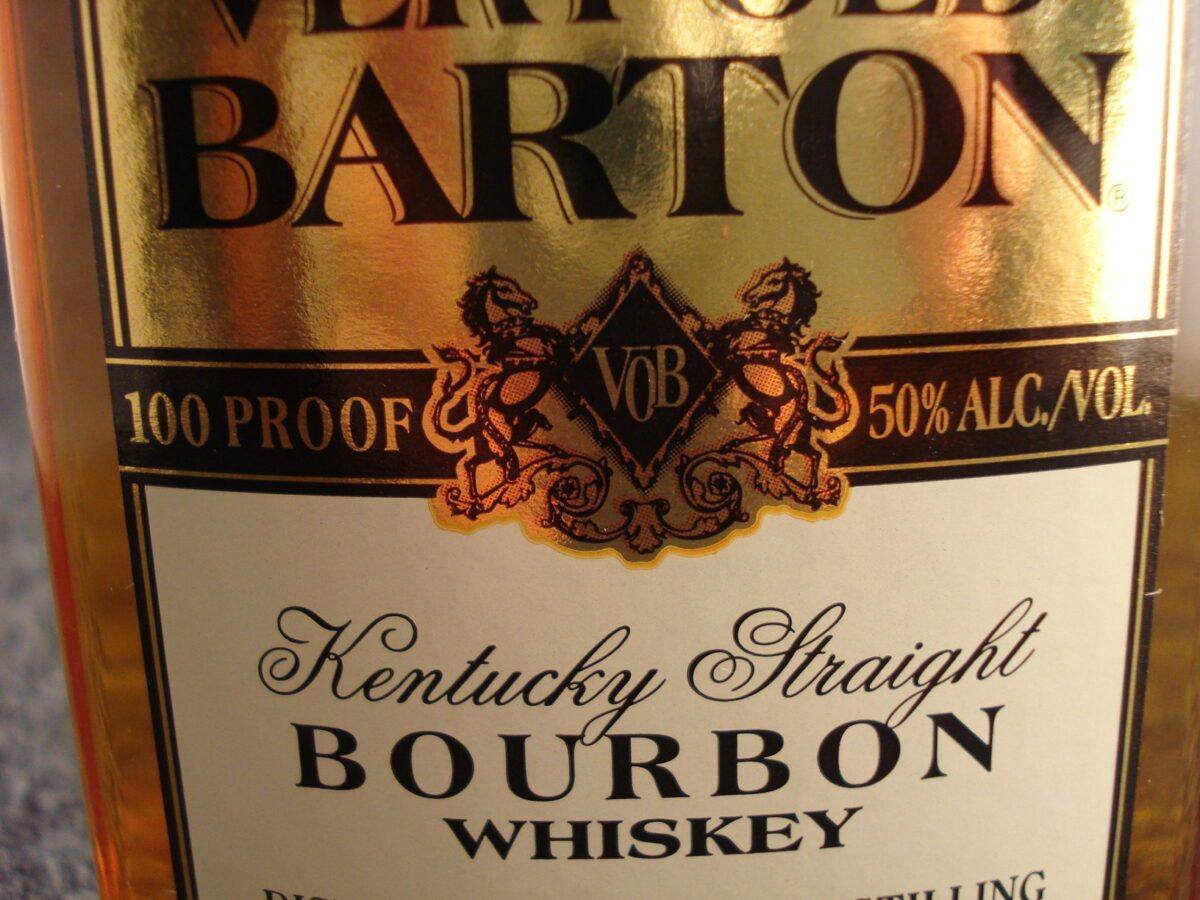
American whiskey labels are governed by federal law, and the law is specific. The standards of identity for distilled spirits, in Title 27 of the Code of Federal Regulations, define what may be called bourbon, what may be called straight bourbon, and what the numbers on the label must mean. Like the Scotch rules, the American rules are a document disguised as marketing. Here is how to read it.
The Legal Recipe
Bourbon has a federal recipe, and it is not negotiable. To be called bourbon, a whiskey must be made in the United States from a grain mixture that is at least 51 percent corn. It must be distilled at no more than 160 proof, which is 80 percent ABV, and it must be entered into the barrel at no more than 125 proof, which is 62.5 percent ABV. It must be matured in charred new oak containers. If it is a mixture of straight bourbons, or a blend of straight bourbons, those statements must appear on the label as well.
Three details in that recipe matter more than they look. First, the 51 percent corn rule is a minimum, not a formula: most bourbons are 70 percent corn or more, and the remaining grain, the small grain, is what distinguishes a high-rye bourbon from a wheated one. Second, the barrel must be new and charred. Unlike Scotch, which reuses casks for decades, bourbon law requires a fresh charred oak container for every batch, which is why the American cooperage industry exists and why used bourbon barrels flood the Scotch and rum industries. Third, there is no minimum age for bourbon as such. A whiskey aged for a day in new charred oak is legally bourbon, though it would be a poor one.
Straight Means Two Years
The word "straight" is where the law gets strict. Straight bourbon must meet all the requirements of bourbon, and it must have been aged for at least two years. If it was aged for less than four years, the label must state the age. That is the federal age-statement rule: under four years, the age must appear; at four years or more, the age statement is optional, which is why so many premium bourbons carry no age at all.
Straight bourbon also faces a purity rule that ordinary bourbon does not. No colouring, flavouring, or blending materials may be added to straight bourbon. The colour in the bottle must come from the barrel and the barrel alone. This is the American equivalent of the Scotch rule on caramel colouring, and it is stricter: Scotch permits plain caramel; straight bourbon permits nothing.
Two more label terms deserve attention. "Bottled in bond" is a legal category, not a marketing phrase: the whiskey must be the product of one distilling season at one distillery, aged at least four years in a government-supervised warehouse, and bottled at exactly 100 proof, which is 50 percent ABV. "Small batch" and "single barrel," by contrast, have no legal definition at all. They are whatever the producer says they are.
Straight bourbon means at least two years in the barrel, no colouring, no flavouring. The colour must come from the wood alone.
What the Label Cannot Promise
As with Scotch, the regulated terms are islands in a sea of marketing. "Small batch" is unregulated. "Handcrafted," "artisan," and "craft" are unregulated. A distillery name on the label does not guarantee the whiskey was distilled there: federal rules require a statement of the actual distiller when the brand owner did not distill the spirit, but the statement can be small, and sourced whiskey is a large and legitimate part of the industry. The label tells you who bottled it. It does not always tell you who made it.
The age statement, where it appears, follows the same youngest-component rule as Scotch: any age stated must be the age of the youngest whiskey in the bottle. And the proof is always there, because American law requires it. Divide by two for the ABV. Read the regulated words as law, the unregulated words as advertising, and the proof as arithmetic. The label will tell you everything it is required to, and nothing it is not.
From the same shelf