WHISKY
King of Kentucky Returns with a 14-Year-Old Single-Barrel Release
Ninety-nine barrels, a ten-proof spread, and a $399 price tag: Brown-Forman's ultra-premium bourbon is back for 2026, and the canister tells you exactly which barrel you own.
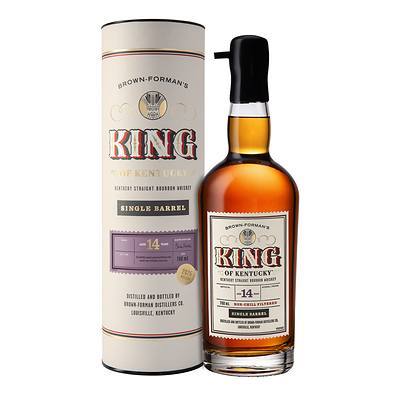
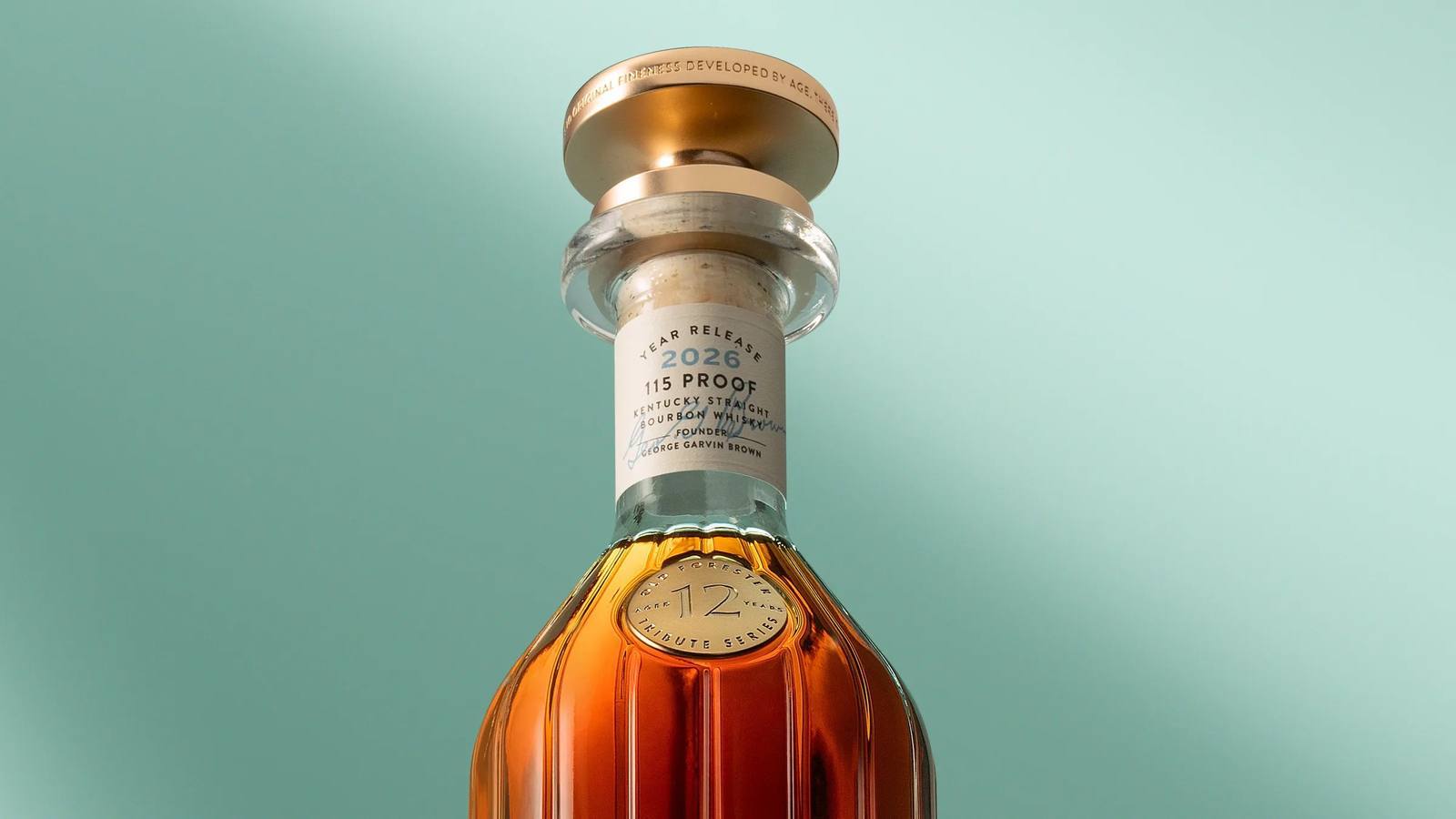
Brown-Forman's King of Kentucky is back for 2026, and it has kept its promise to be the most extreme bourbon the company sells. The new release is a 14-year-old Kentucky straight bourbon in true single-barrel format, drawn from two 14-year-old lots totaling 99 barrels, with barrel proofs ranging from 125 to 135. The suggested retail price is $399, and quantities are limited to select markets across the United States.
The two lots are a study in warehouse geography. Of the 99 barrels selected, 51 matured on the third floor of Warehouse I and 48 on the first floor of Warehouse L, both at the Brown-Forman Distillery in Louisville. Warehouse position is one of the few variables in bourbon-making that is fully legible: upper floors run hotter through the Kentucky summer, driving deeper wood interaction and greater evaporation, while lower floors age more gently. A ten-proof spread across fewer than a hundred barrels is the honest consequence of single-barrel whiskey drawn from two different floors: no blending, no batching, no smoothing the edges. What came out of each barrel is what goes into the bottle, and the bottles will not taste the same.
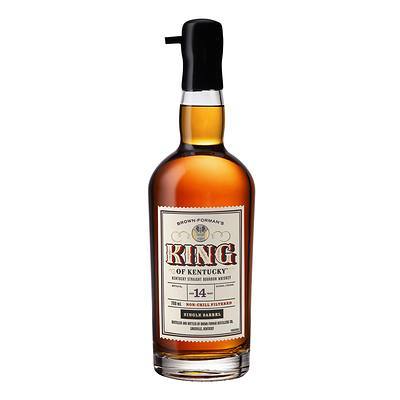
That variation is not a defect here; it is the product. Every bottle is hand-filled, wax-dipped and numbered, and it ships inside a custom canister that records the proof, age, warehouse location, lot number, serial number and barrel number of the exact barrel it came from. In an era when most premium bourbon arrives with a batch number at best, King of Kentucky offers full barrel traceability. The canister is the story: provenance you can put on a shelf.
Caleb Trigo, assistant master distiller, put the selection philosophy plainly: "Each of these 99 barrels was selected for its exceptional character, and after 14 years of aging, they deliver the bold, complex profile that defines King of Kentucky."
The canister does more than decorate. By recording warehouse, floor, lot and barrel number, it hands drinkers the raw material for comparison: a third-floor Warehouse I barrel and a first-floor Warehouse L barrel are two different aging regimes, and the proof on each canister tells you which way the angels leaned. Every release becomes a dataset, and the dataset keeps collectors comparing long after the allocation sells out.
Brown-Forman describes the whiskey's character in its own terms, and they are worth reporting as the company's account rather than anyone's tasting. The aroma is described as fruit-forward, with orange zest, rich caramel, dark chocolate and toasted marshmallow layered over nutty oak. The palate carries dark maple syrup over orange zest, vanilla wafer and a touch of baked banana, and the finish is exceptionally long, with silky notes of caramel and chocolate. Those are house notes for a house that rarely needs to exaggerate: at 14 years and up to 135 proof, the barrel has already made its argument.
There is a market story here as well, and it is the more interesting one. Ninety-nine barrels at $399 a bottle is a small commercial footprint and a large statement of confidence. The ultra-premium tier of American whiskey has shown a stubborn ability to clear shelves at prices that would have been unthinkable a decade ago, even as the broader spirits category cools. King of Kentucky is Brown-Forman's most direct bet on that dynamic: an allocated, age-stated, barrel-proof bourbon that makes no concession to drinkers who want their whiskey tamed.

The brand's history gives the release its weight. King of Kentucky was established in 1881 as a Kentucky straight bourbon. Brown-Forman acquired it in 1936 from Selected Kentucky Distillers, then discontinued it in 1968. For fifty years it was a memory; in 2018 the company revived the label as an ultra-premium limited-production line, and it has kept that positioning ever since. This is a brand that has spent more of its life dormant than active, and its modern incarnation trades on exactly that scarcity.
Whether the 2026 release earns its $399 will be decided by the people who open their canisters and compare barrels, which is precisely the ritual the packaging invites. Single-barrel whiskey is the one format where the drinker gets to be the blender, hunting the barrel profile that suits their palate. Ninety-nine barrels means ninety-nine answers. In the allocated-bourbon economy, that is not a compromise. It is the entire appeal.
From the same shelf