CASK
The Angel's Share: What Evaporation Really Costs
Every year in the warehouse, part of the whisky leaves through the wood. The numbers, the climate science, and the economics of what disappears.
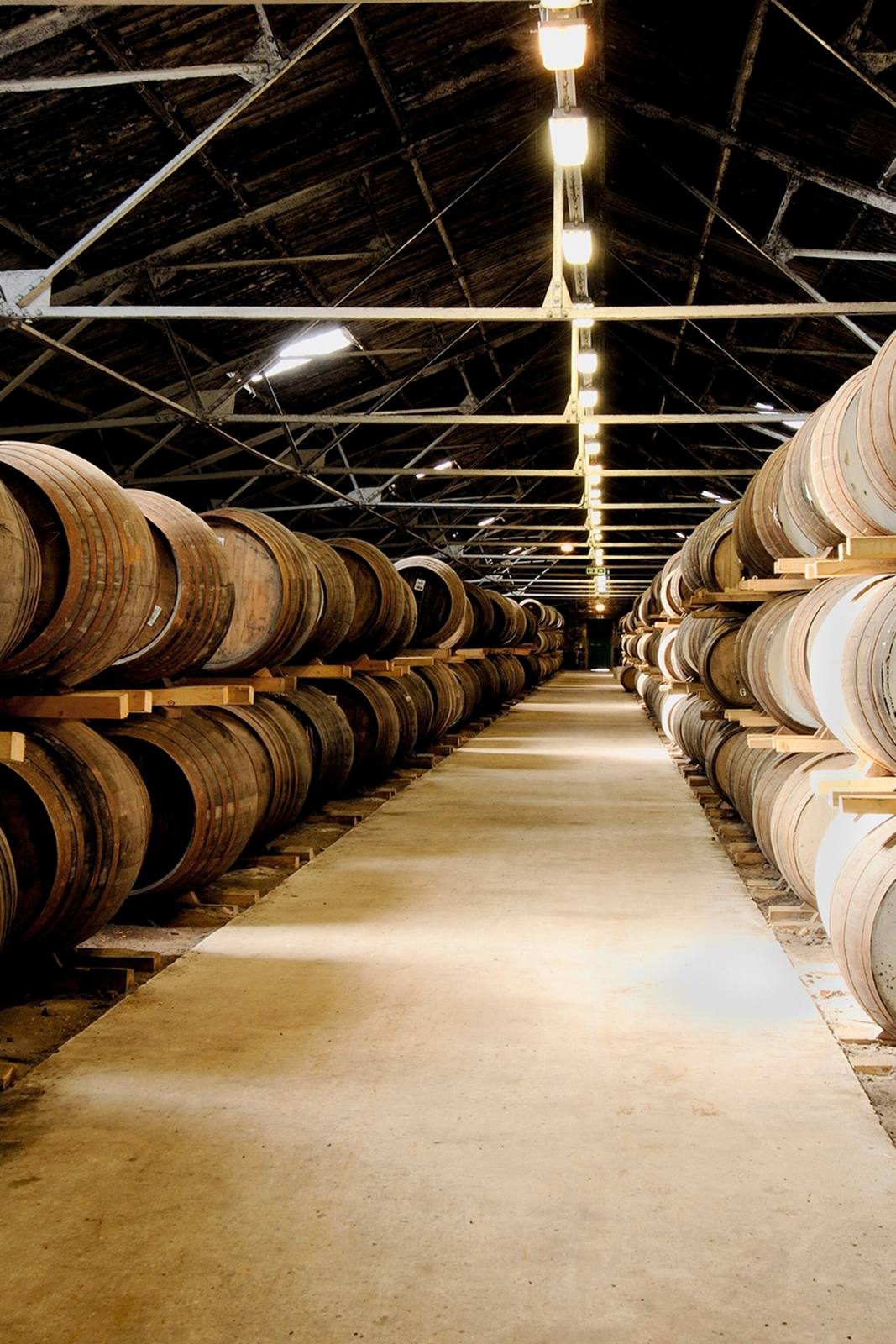
Every cask in every warehouse on earth is leaking. The wood breathes, and with each breath a little spirit escapes: through the staves, through the bung, into the air of the warehouse. The industry calls it the angel's share, which is a lovely name for a cost. Over the decades of a long maturation, the cumulative loss is enormous, and it shapes the economics of old whisky more than almost anything else.
The headline numbers are familiar. In Scotland, evaporation runs at roughly 2 percent a year. In Kentucky, it is two to four percent, sometimes more in the hot upper floors of a rickhouse. In the tropics, where heat and humidity work together, it can reach 12 percent a year. The range matters more than any single figure: climate, humidity, warehouse design, cask size, and time all move the number, and a single fixed percentage is a fiction.
What the climate takes
The physics is straightforward. Heat accelerates evaporation. In Scotland's cool, damp warehouses, the loss is slow and steady. In Kentucky's tall rickhouses, the top floors bake in summer and the angel's share climbs; distillers rotate barrels or accept the difference as part of the warehouse's character. In tropical warehouses in India or Taiwan, a cask can lose in five years what a Scottish cask loses in twenty, which is one reason tropical maturations taste older than their age statements suggest.
Humidity decides what kind of loss it is. In dry air, water evaporates faster than alcohol, and the spirit's strength rises over time. In humid air, alcohol evaporates faster, and the strength falls. This is why a whisky matured in Scotland tends to lose proof slowly while one matured in a dry American warehouse can gain it. The angel does not take a fixed tithe. The angel takes what the climate offers.
The angel's share is a lovely name for a cost, and over decades it is an enormous one.
The economics of disappearance
Compounded over time, the losses are staggering. A 50-year-old Scotch may have lost up to three quarters of the spirit that went into the cask. A bourbon aged fifteen years in Kentucky heat can lose the majority of its volume. Every bottle of very old whisky is, in a literal sense, the survivor of most of its cask-mates, and the price reflects not just the years but the attrition. You are paying for the whisky that evaporated as well as the whisky in the glass.
This is also why the tax treatment matters. In the UK, the angel's share has long been recognized in the way duty is handled on maturing stock; in the US, the bourbon industry has fought its own versions of the same argument. When a government taxes a warehouse, it is taxing liquid that is visibly disappearing, and the industry has spent a century negotiating the terms of that disappearance.
There is a final, quieter consequence. A cask that loses volume every year is a wasting asset in the most literal sense, and trade reporting has long noted that maturing whisky is generally treated as exempt from capital gains tax in the UK on exactly those grounds: it has a predictable life of less than fifty years, because the angels see to it. The evaporation is not just a cost of production. It is written into the legal definition of what the asset is.
The romance of the name survives because the reality is worth romanticizing, a little. The spirit that leaves the cask does not vanish: it hangs in the warehouse air, and anyone who has walked through a dunnage warehouse on a cold morning has breathed it. The angels get their share. The rest of us get what is left, and what is left is the point.
From the same shelf