CASK
Wood Is the Second Distillery
Char levels, oak species, and the sherry-cask economy: everything the barrel decides about a whisky before the distiller gets a vote.
Most of what a drinker tastes in a whisky was decided by a tree and a fire. Distillation sets the raw spirit's character, but the years in wood do the finishing work: the color, much of the sweetness, the tannin structure, and the entire vocabulary of vanilla, spice, and dried fruit that the industry talks about. The barrel is not packaging. It is the second distillery, and it deserves the same attention as the first.
The oak
Almost all of it starts with two species. American white oak, Quercus alba, grows fast and straight, which makes it cheap to work, and its open grain gives up its flavor quickly: the vanilla, coconut, and sweet spice of bourbon country. European oak, Quercus robur, grows slower and denser, costs more, and gives darker, more tannic flavors: the dried fruit and leather of a sherry-matured Scotch. The choice of oak is the first flavor decision, and it is made before the cask is even raised.
American law sharpens the point. Bourbon must by statute be aged in new, charred oak containers, which means the bourbon industry's barrels are single-use by definition. That legal requirement is the foundation of the Scotch industry's cask supply: ex-bourbon barrels cross the Atlantic by the hundred thousand and begin their second lives in Scotland. The sherry casks are different. There is no used-sherry-barrel industry large enough to supply Scotch, so the casks are made to order: seasoned with sherry for eighteen months or more, then emptied and shipped. They are bespoke ingredients, and they are priced like it.
The fire
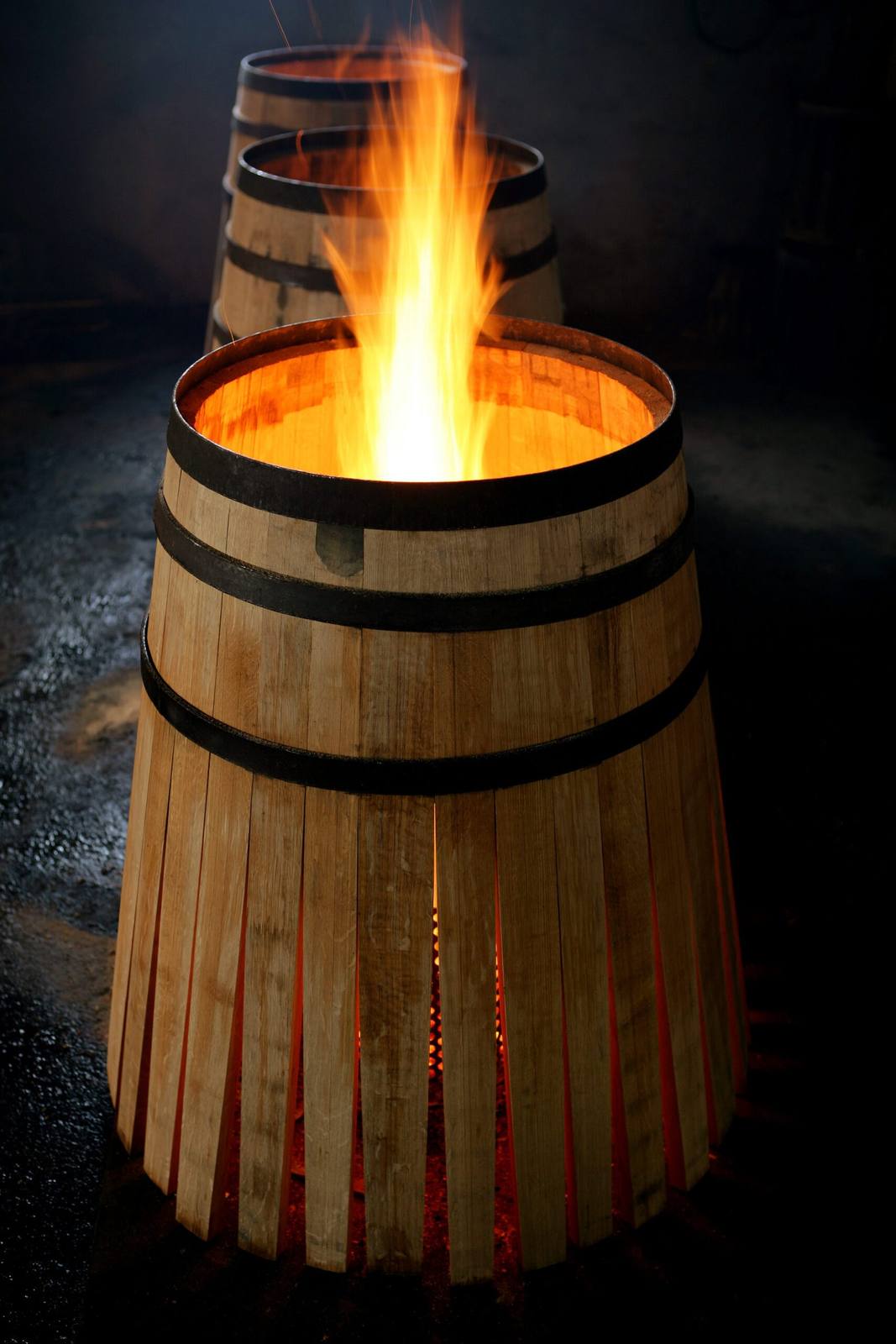
Then comes the char, and the char is measured. The industry works in four levels. Level 1 is a 15-second kiss of flame. Level 2 is 30 seconds. Level 3 is 35 seconds. Level 4, the alligator char, is 55 seconds, named for the cracked, scaly surface it leaves on the wood. Angel's Envy, which publishes its cooperage specs, uses a level 3 char on its bourbon barrels. The heavy char of a number 4 opens the wood deep, caramelizing the sugars in the staves and creating the charcoal layer that filters the spirit.
Charring and toasting are not the same thing, and the distinction matters. Charring is direct flame, a fast, violent treatment that cracks the wood and creates char. Toasting is slower heat, no flame, which develops different flavors: the confectionery notes, the toasted bread, the softer spice. A cooperage can toast a barrel, char it, or do both in sequence, and each combination is a different recipe. When a distillery talks about its wood program, this is what it is talking about: oak species, toast profile, char level, and the order they were applied in.
The barrel is not packaging. It is the second distillery.
The seasoning
The last decision is what the cask held before. A first-fill sherry butt gives the whisky everything it has: color, fruit, tannin, the works. A refill cask, used two or three times over, gives less each time, which is why old refill wood is prized for long aging: it lets the spirit mature without overwhelming it. The sherry itself matters too. A cask seasoned with oloroso gives different flavors from one seasoned with fino or Pedro Ximénez, and the seasoning sherry is a cost the cooperage bears before the cask ever holds whisky.
All of this is why the sherry-cask market has become a strategic asset rather than a supply chain. When Edrington buys into Spanish cooperages and sawmills, it is buying eighteen months of seasoning time, the oak forests behind it, and the coopers who do the work. The second distillery is getting expensive. The whisky industry has noticed, and it is buying the building. The coopers, as ever, keep raising the casks by hand.
From the same shelf