MAKERS
The Cooper's Century
Edrington now owns half a Spanish forestry group. Scotch whisky's great sherry-cask hunt has turned the industry's biggest player into a timber company.
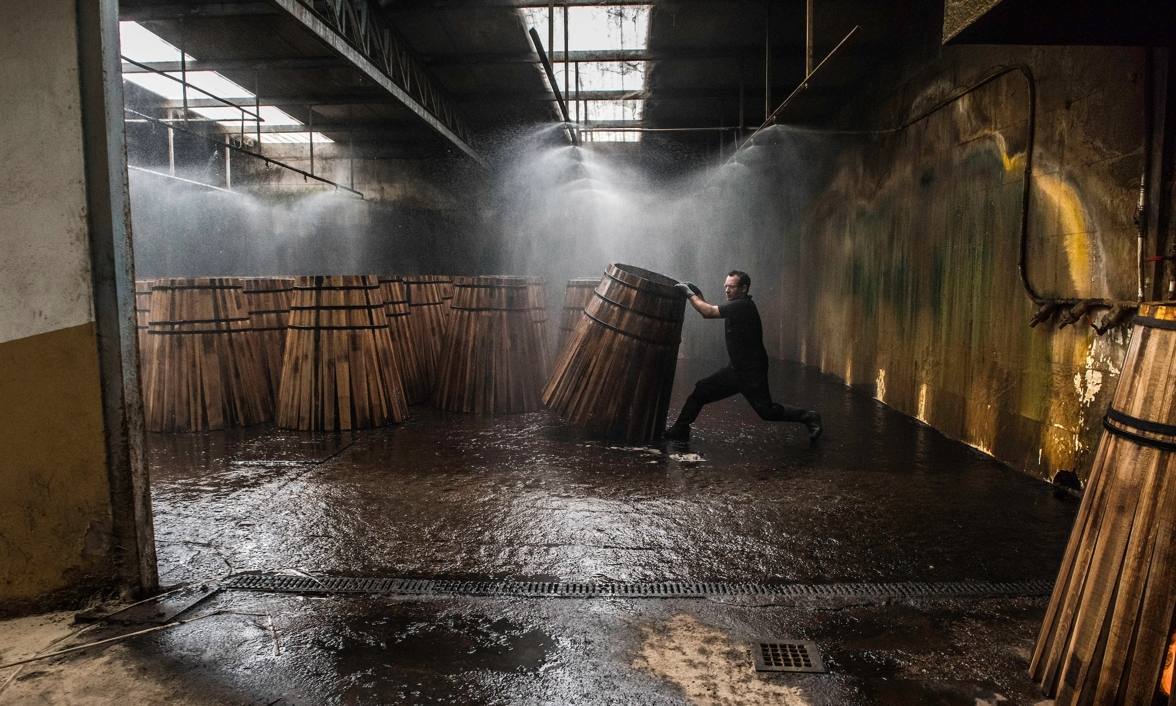
Scotch whisky has a wood problem, and the industry's biggest players have decided the solution is to own the forest. In September 2024, Edrington, the company behind The Macallan, acquired a 50 percent stake in the Tevasa Forestal Group, a Spanish company whose assets include a cooperage in Jerez and sawmills in Lugo and Cabezón de la Sal. It was the fourth sherry-cask partnership the company had secured in just over a year. The whisky business is becoming, quite literally, a timber business.
The logic is supply security. Sherry casks are the most consequential ingredient in Scotch after the barley, and the most contested. The partnership with Tevasa was framed explicitly as a long-term answer: control of the cooperage, the sawmills, and the forestry that feeds them. Tevasa was founded in Jerez in 1984 and had already worked with The Macallan for more than 40 years. The relationship did not start with the acquisition. The acquisition made permanent a dependency that already existed.
The sherry-cask economy
What Edrington is buying is not just casks but the whole upstream chain. The Tevasa Forestal Group's structure tells the story: a cooperage where the casks are raised, sawmills where the oak is cut, and forestry interests behind them. Oak takes decades to reach cooperage size, and the supply of the right wood, seasoned the right way, is the slow-moving constraint on an industry that plans in decades anyway. When The Macallan’s then managing director, Igor Boyadjian, said the partnership would give the company ‘an unparalleled level of ownership in the production process of Sherry-seasoned casks’, he was speaking on the industry’s actual time scale. (Boyadjian has since left the company.)
The move fits a pattern. A year earlier, Edrington acquired Vasyma, another Spanish cooperage, and entered a joint venture with the American oak specialists Coopers Oak. The company now holds interests across both European and American oak, in both cooperages and sawmills. Other distillers have taken similar positions: the sherry-cask relationships that used to be commercial contracts are becoming equity relationships, because a contract can be broken and a cooperage cannot be built overnight.
The consolidation has a history. Tevasa's group includes Forestal Peninsular, a forestry business founded in 1972, which means the chain Edrington bought into runs from standing timber through sawmill and cooperage to seasoned cask. Few whisky companies have ever owned that much of their own supply chain. The Scotch industry spent the twentieth century outsourcing everything it could. It is spending the twenty-first buying it back, starting with the wood.
The whisky business is becoming, quite literally, a timber business.
The craft under the capital
It is easy to read this as a story about capital, but it is also a story about craft. A cask is still raised by hand, the staves still joined by coopers who learned the work the old way, and the seasoning of a sherry cask, the months it spends holding sherry before it ever sees whisky, remains a judgment call. The acquisitions do not replace that craft. They are a bet that it will matter more, not less, as supply tightens.
The numbers underneath are worth stating plainly. The cooper’s century is not a metaphor. It is a supply chain, and the industry’s biggest player just bought a controlling interest in its own. The next century of Scotch will be decided in the forest as much as in the stillhouse.
From the same shelf