Cognac & Armagnac

Travel retail down 6 percent, forecasts down again for 2026, tariffs on two fronts. The brandy category is fighting the trade war on every border.

Cognac is having its hardest year in recent memory, and the damage is coming from every direction at once. Global travel-retail volumes for Cognac and brandy fell 6 percent in 2025, with value down 8 percent, according to IWSR data reported in September 2026. Euromonitor forecasts cited by The Spirits Business put Cognac volumes down 5.9 percent in 2025, with a further 3.9 percent decline forecast for 2026. Two of the category's three great markets, China and the United States, are simultaneously hostile. The third, Europe, is mature.
Precision matters here, because the data sources describe different things. The IWSR travel-retail figures cover Cognac and brandy together. The Euromonitor forecasts are Cognac-specific. They point in the same direction, but they are not the same number, and conflating them would overstate the precision of a bleak picture that is already precise enough.
The Chinese pressure is regulatory. Beijing's anti-dumping measures against European brandy, principally Cognac, have weighed on the category's most important growth market of the past decade. The American pressure is fiscal. From 1 August 2025, the United States imposed a 15 percent tariff on imports of European wines and spirits, Cognac included. In November 2025, when Washington removed certain agricultural products from its reciprocal tariff list, spirits were not among the exemptions. The tariff stands.
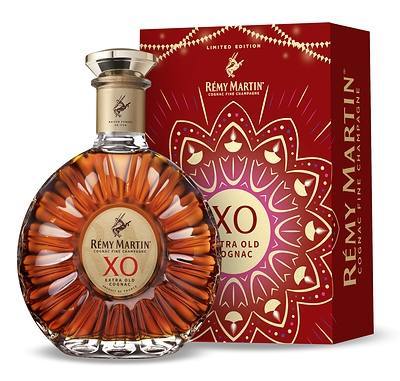
Rémy Cointreau, owner of Rémy Martin, has quantified its own exposure. The group revised its estimated net tariff impact on current operating profit from 45 million euros to 30 million euros for the 2025-26 fiscal year, split between 10 million euros in China and 20 million euros in the United States, after factoring in its mitigation plans. That is the company's own estimate, and it describes damage contained rather than damage avoided. Thirty million euros is still thirty million euros.
The travel-retail numbers deserve attention because duty free has historically been Cognac's shop window. A 6 percent volume decline and an 8 percent value decline in 2025, in a channel that was supposed to be recovering, suggests the problem is demand, not just distribution. IWSR's broader travel-retail analysis, published in September 2026, framed the channel as being reshaped by emerging categories: the shelf space Cognac loses is not sitting empty. It is going to something else.
The major houses have responded the way major houses do: with investment in the markets that still work and patience in the ones that do not. But patience has a cost when the pressures are structural. Chinese anti-dumping measures are policy, not sentiment. American tariffs are legislation, not mood. Neither unwinds because a brand campaign lands.
Travel retail down 6 percent in volume, 8 percent in value. Forecasts see another 3.9 percent decline in 2026. Two of three great markets are hostile at once.
The honest version of the Cognac story is that the category's golden decade, roughly 2015 to 2022, was built on two markets that are now both difficult, and on a luxury-goods logic that assumed ever-rising Chinese demand. That logic has broken. The Euromonitor forecast of a second consecutive annual decline in 2026 suggests the industry's own analysts do not expect a quick rebound.
Recovery, when it comes, will likely come from the places Cognac has historically underinvested: the American market beyond the tariff, where the 15 percent duty is a tax on the category's future; the European home market, which the houses have long treated as an afterthought; and the slow work of rebuilding demand among drinkers rather than collectors. None of that is quick. The hardest year may not be this one. It may be the one in which the industry discovers how long hard lasts.