Cognac & Armagnac
€93,000 for a bicentenary demijohn. £118,580 for a bottle filled in the 1840s. Reading the auction results with the premium stripped out.
Two auction results define the ceiling of the vintage Cognac market, and they are routinely cited without the details that make them meaningful. In December 2024, a Bonhams lot from Delamain sold for €93,000 including premium. In May 2020, Sotheby's sold a bottle of Gautier 1762 for £118,580. Both are records of a kind. Neither means what the headline suggests, and the differences between them are the whole education.
The December 2024 Bonhams sale in Paris offered Delamain L'Édition Rare du Bicentenaire, created for the house's bicentenary, 1824 to 2024. The lot comprised a decorated demijohn filled to 9.5 litres, accompanied by a 70cl bottle, at 43 percent ABV. It sold for €93,000 including the buyer's premium.
Three things matter about this result. First, the price is premium-inclusive: the hammer price was lower, and the premium went to Bonhams, not the seller. Second, the lot was 10.2 litres of Cognac in total, not a single bottle, which reframes the per-litre arithmetic considerably. Third, and most important, this was a modern creation: a 2024 bottling made to celebrate a bicentenary, containing old eaux-de-vie but assembled and bottled in the present day. It is a luxury object with vintage contents, not a vintage bottle in the collector's sense. The distinction matters because the risks are different. A modern bottling has known provenance, intact seals, and documented contents. Its value is in the craftsmanship and the occasion, not in survival.
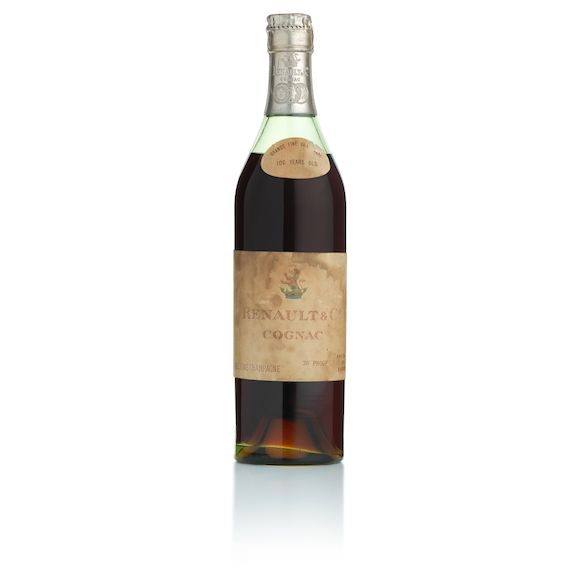
The Sotheby's result is the more extraordinary object. On 28 May 2020, Sotheby's sold a 70cl bottle of Gautier 1762 for £118,580. The Cognac was distilled in 1762 and is believed to have been bottled in the 1840s, which would make the liquid itself around eighty years old at the time of bottling and the bottle nearly two centuries old at the time of sale. It was described as the oldest Cognac ever sold at auction.
This is a genuinely different asset class from the Delamain. A bottle filled in the 1840s has survived nearly two centuries of storage, handling, wars, and cellar moves. Its value rests on a chain of custody that cannot be fully verified: the fill level, the condition of the closure, the storage history, and the simple fact of survival. Auction houses do their diligence, but a 1762 Cognac is ultimately bought on faith, expertise, and the reputation of the consignor. The price reflects not just the liquid but the miracle of its existence.
One confusion to clear up: a different bottle of Gautier 1762 sold in New York in 2014. The two results are sometimes merged in retellings. They are separate bottles, separate sales, separate prices. The 2020 Sotheby's result stands as the record for the oldest Cognac sold at auction.
€93,000 bought 10.2 litres of a modern bicentenary bottling. £118,580 bought 70cl of Cognac distilled in 1762. Different objects, different risks.
The two sales together are a complete education in reading auction headlines. Strip out the buyer's premium before comparing results. Check whether the price covers a single bottle or a multi-litre lot. Distinguish a modern bottling of old eaux-de-vie from a genuinely old bottle, because the provenance risks are entirely different. And remember that in Cognac, unlike wine, the age stopped the day the spirit left the wood: a "1762" on the label is the distillation year, not the bottling year, and the century in between is storage, not maturation.
Vintage Cognac is a market for specialists, and the specialists price risk, not romance. The Delamain result prices craftsmanship and occasion. The Gautier result prices survival. Both are legitimate. Neither is a guide to what the bottle in your cellar is worth.