Cognac & Armagnac

Beyond the big four houses, a generation of family estates is bottling the Charente on its own terms. Four names worth knowing.
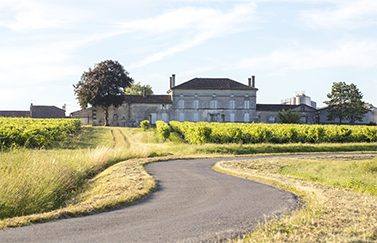
Cognac is dominated by four houses that account for the overwhelming majority of global volume. But the Charente has another layer: family estates that grow, distill, age, and bottle their own eaux-de-vie, selling under their own names to drinkers who have learned to look past the big labels. A 2019 Harpers survey of the trade identified a movement of smaller producers gaining attention, naming Fanny Fougerat, Bourgoin, Jean-Luc Pasquet, Paul Giraud, Philbert Brothers, and Rémi Landier among the names to watch. Four of them are worth a closer look.
A necessary caveat: this publication has not visited these estates, and nothing here is first-hand tasting. What follows is assembled from published trade reporting and the producers' own documented histories.
Paul Giraud is a family estate in Bouteville, in the heart of Grande Champagne, the first cru of the Cognac region. The house is documented by Cognac Expert as a traditional family producer, and it was among the smaller houses highlighted in the Harpers trade survey. Grande Champagne eaux-de-vie are prized for their finesse and their very long aging potential, and an estate bottling from the cru is the purest expression of the region's style: the big houses blend across crus for consistency, while a Giraud bottling is Bouteville in a glass.
The estate model matters here. When the grower, the distiller, and the bottler are the same family, the chain of custody is total. There is no purchased eau-de-vie, no blending across suppliers, no marketing layer between the vineyard and the bottle. For drinkers who care about provenance, that is the entire argument.
Jean-Luc Pasquet, based in Eraville in Grande Champagne, was also named in the Harpers survey, and the house is notable for its early commitment to organic viticulture in a region where conventional farming remains the norm. The estate's documented history traces back through the Pasquet family, and its Cognacs are estate-distilled and aged on the property. Organic certification in Cognac is rare enough to be a differentiator on its own; combined with estate bottling, it makes Pasquet one of the most distinctive small houses in the region.
Fanny Fougerat represents the generational change in the Charente. Taking an active role in the family estate, she was singled out in the Harpers reporting as part of the smaller-producer movement bringing new attention to estate Cognac. Rémi Landier, similarly, is a family house that has built its reputation on estate-grown, estate-distilled Cognacs sold under its own name rather than supplied anonymously to the big houses.
What unites these producers is the economic choice they represent. The traditional business of the small Charentais grower was to sell eau-de-vie to the big houses, which blended it into their VS and VSOP. Bottling under your own name means forgoing that guaranteed income, investing in stocks that will not sell for a decade, and building a brand from nothing. It is a harder business. It is also the only way the Charente's diversity ever reaches a glass.
The big houses blend across crus for consistency. An estate bottling is one village, one family, one cellar. That is the entire argument.
The timing is not accidental. As Cognac's big houses face tariffs in the United States and anti-dumping measures in China, the small estates offer something the majors cannot: scarcity, traceability, and a story that does not depend on duty-free volumes. The American drinker discovering Cognac through a craft cocktail bar is more likely to meet a small-producer bottle than a duty-free gift set.
None of this is to romanticize the economics. Small Cognac houses operate on the same brutal timeline as everyone else in the region: distill this winter, sell in a decade. What has changed is the audience. A generation of drinkers raised on single-origin coffee and natural wine understands the estate argument intuitively. The Charente's small producers have been making that argument for generations. The market is finally listening.